

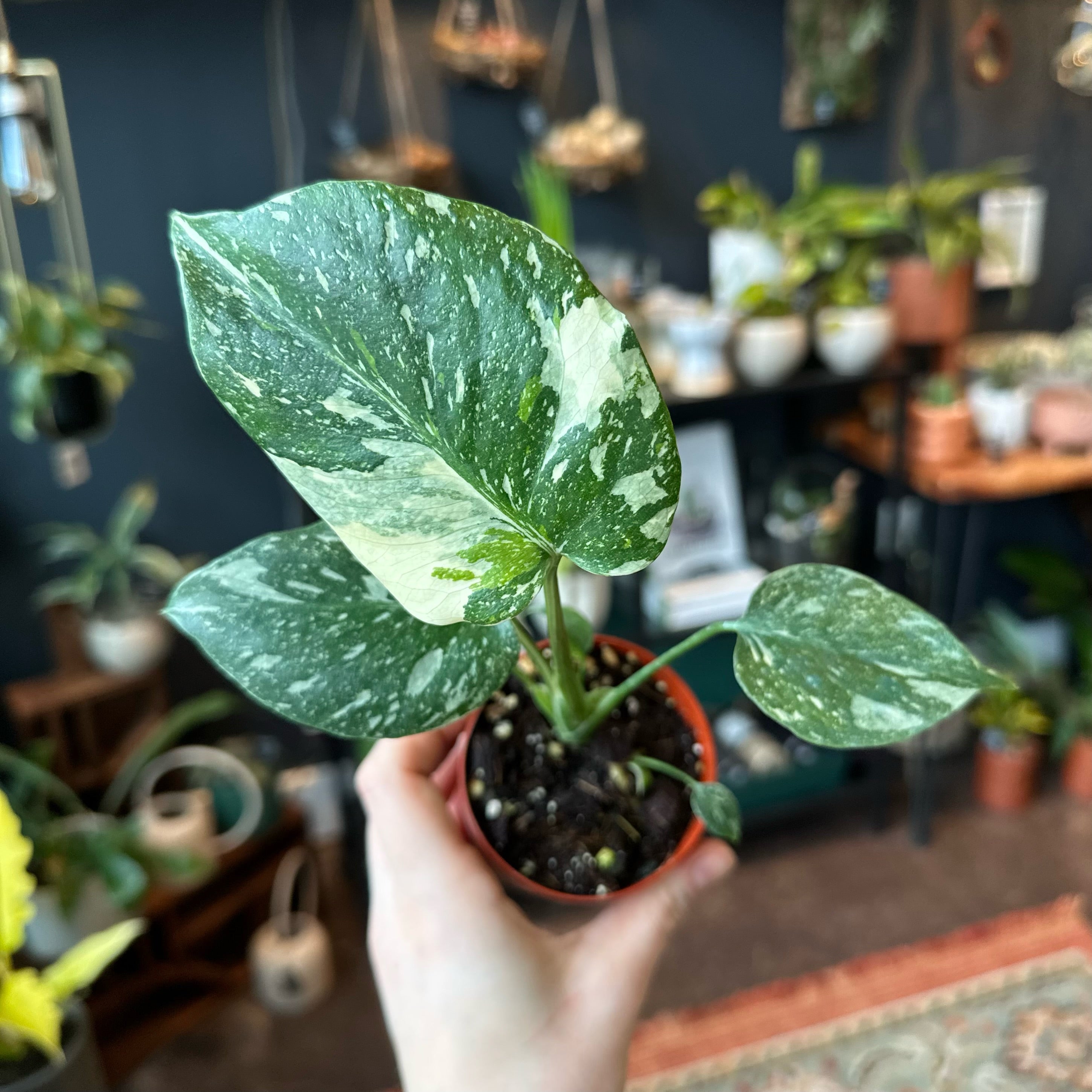
Monstera 'Thai Constellation'
Monstera deliciosa ‘Thai Constellation’ is one of the most sought-after variegated houseplants, admired for its creamy white and soft yellow speckling scattered across deep green leaves like a sky full of stars.
Created in a laboratory in Thailand, this cultivar was developed from Monstera deliciosa to produce stable, beautiful variegation. As the plant matures, the leaves develop the iconic fenestrations Monsteras are known for, paired with marbled, constellation-like patterns that make every leaf unique. Slower growing than its all-green parent, this stunning plant is considered a true centerpiece and a must-have for any serious plant collection.
Light
Prefers bright, indirect light to support healthy growth and maintain strong variegation. Because the variegated portions of the leaves contain less chlorophyll, the plant benefits from consistent, good lighting. Avoid prolonged direct sun, which can burn the lighter sections of the foliage.
Water
Allow the top 1–2 inches of soil to dry between waterings, typically every 7–10 days depending on temperature, humidity, and pot size.
Use a well-draining soil mix and ensure the pot has drainage holes. Overwatering can lead to root rot, while underwatering may cause drooping leaves or slowed growth.
Pet Safe
No, Monstera deliciosa ‘Thai Constellation’ is toxic to cats, dogs, and humans if ingested. Like other Monsteras, it contains calcium oxalate crystals that can cause irritation to the mouth, throat, and digestive system. Keep out of reach of pets and children.
Watch out for…
This variety grows more slowly than standard Monstera deliciosa, which is normal due to its variegation. Providing a moss pole or climbing support can encourage larger leaves and more pronounced fenestrations as it matures.
Keep an eye out for common houseplant pests such as spider mites, thrips, and mealybugs, particularly in dry indoor environments.
Similar care to…
Very similar care to Monstera deliciosa and other climbing aroids. It also shares comparable watering and lighting needs with plants like Rhaphidophora tetrasperma, Philodendron varieties, and Pothos.
Leave a comment
This site is protected by hCaptcha and the hCaptcha Privacy Policy and Terms of Service apply.