

Article: Blue Star Fern
Blue Star Fern
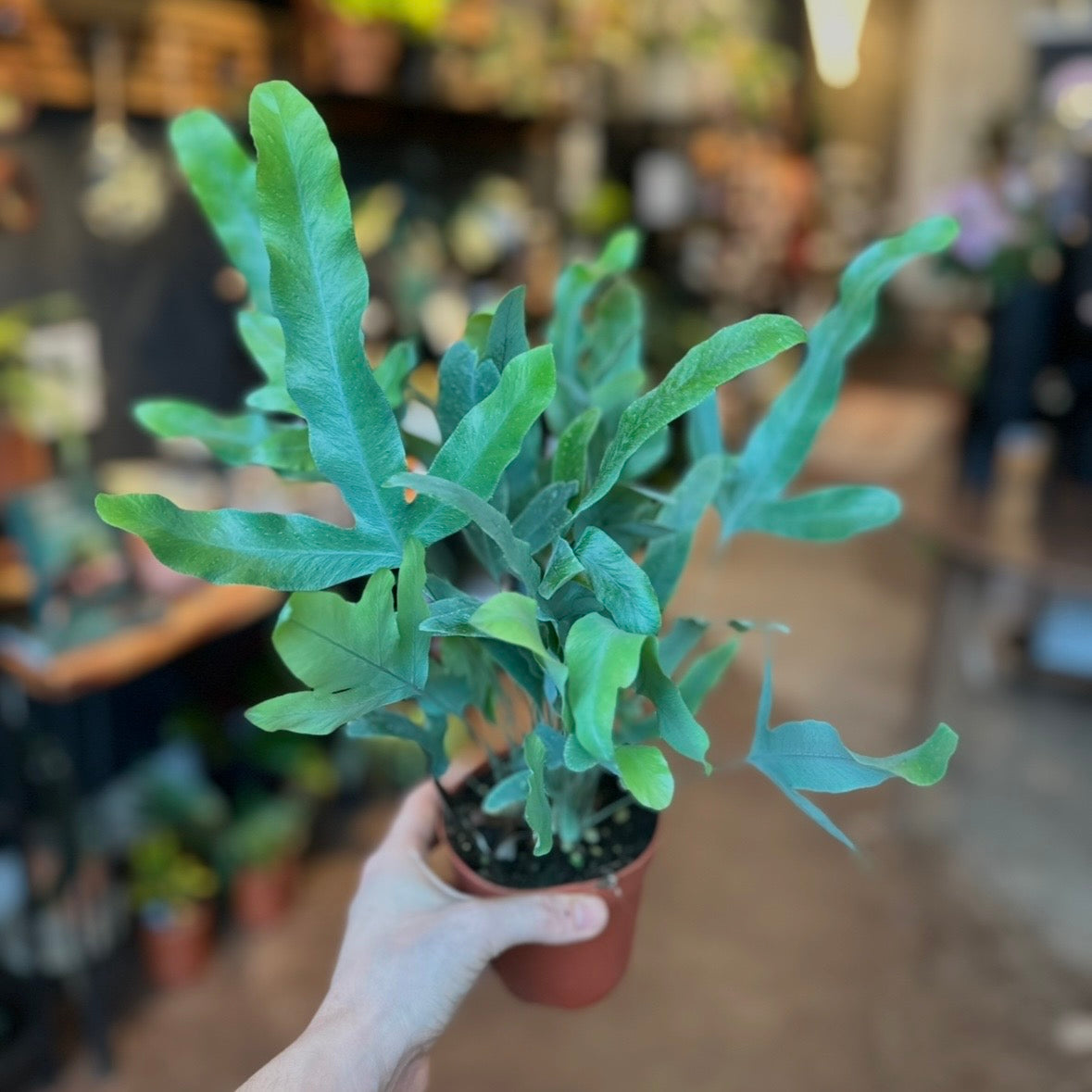
Phlebodium aureum, commonly known as the Blue Star Fern, is a distinctive tropical fern admired for its soft blue-green foliage and uniquely shaped fronds.
Native to tropical and subtropical regions of Central and South America, as well as parts of North America, this plant naturally grows as an epiphyte, meaning it often lives on trees rather than in the ground. It features fuzzy, orange-brown creeping rhizomes that grow along the soil surface.
Blue Star Ferns typically grow about 12–24 inches tall and wide, developing a relaxed, arching form that looks beautiful on shelves, plant stands, or in decorative pots.
Compared with many other ferns, this species is known for being more forgiving and less fussy, making it a great option for beginners or anyone wanting the fern look without constant maintenance.
Light
Prefers bright, indirect light but can tolerate moderate light conditions as well. Avoid strong direct sunlight, which can scorch the fronds or fade their distinctive blue coloration.
Water
Allow the top inch or two of soil to dry slightly between waterings. Blue Star Ferns are more drought tolerant than many ferns, but they still prefer lightly moist soil overall. Water thoroughly, allowing excess water to drain away, and avoid letting the plant sit in standing water.
Pet Safe
Blue Star Ferns are generally considered non-toxic to cats and dogs, making them a great choice for pet-friendly homes.
Watch out for…
Overwatering is the most common issue. Because this fern has thick rhizomes that store moisture, consistently soggy soil can lead to root rot. Make sure the pot has good drainage and allow the soil to dry slightly between waterings.
Very dry indoor air may cause occasional browning at the tips of fronds, though this species tolerates typical household humidity better than many other ferns. Like most houseplants, it may occasionally attract pests such as spider mites or scale.
Similar care to…
Shares similar care needs with other epiphytic or tropical foliage plants that enjoy bright indirect light, moderate watering, and good airflow. It pairs well with easygoing tropical plants that prefer slightly moist soil and warm indoor temperatures.

Leave a comment
This site is protected by hCaptcha and the hCaptcha Privacy Policy and Terms of Service apply.